









SP-Indonesia.com, Indonesia – On the occasion of World Press Freedom Day 2026, which is commemorated every May 3rd, the Alliance of Independent Journalists (AJI Indonesia) emphasizes that press freedom is not merely an annual slogan, but rather the main foundation of a healthy, transparent, and accountable democracy.
Without a free press, there is no check on power, and without checks, democracy becomes merely a meaningless procedure.
The commemoration of World Press Freedom Day 2026 must be a momentum to strengthen the global commitment to protecting journalists. Freedom of expression and the public’s right to information must not be sacrificed in the name of stability, security, or short-term political interests.
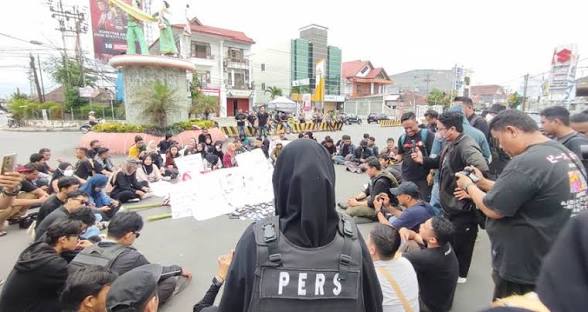
However, the reality in Indonesia shows a worrying trend. Violence against journalists continues to occur in various forms: physical intimidation, digital attacks, criminalization, and systematic economic pressure on the media.
AJI Indonesia recorded 91 cases of violence against journalists in 2025, both physical and digital. According to a report by Reporters Without Borders (RSF), Indonesia’s press freedom ranking in 2026 dropped to 129th out of 180 countries, categorized as “difficult.” This was down from 127th in 2025.
In addition to physical and digital violence, the practice of censorship and self-censorship, which were common during the New Order era, has re-emerged and is becoming increasingly stronger.
Many journalists and editors are forced to self-censor by limiting themselves, avoiding sensitive issues, or changing the substance of their coverage due to political pressure, legal threats, or economic interests.
Meanwhile, censorship practices are carried out by the government and business institutions, pressuring media outlets to delete news (takedowns), change headlines or content, or even threaten to suspend advertising or collaboration.
This situation is just as dangerous as physical and digital violence, as it gradually erodes the independence and courage of the press.
This situation indicates that the safe space for journalists is shrinking. When censorship and self-censorship become “normal” practices, the public suffers because they lose access to accurate and critical information.
Therefore, AJI Indonesia urges
1. The state is obliged to guarantee the safety of journalists, without exception. Every case of violence against journalists must be thoroughly investigated through a transparent, accountable, and independent legal process. Failure to resolve these cases is a form of neglect.
2. End impunity now. There must be no compromise with perpetrators of violence against journalists. Law enforcement must be firm and non-discriminatory. Impunity is the main enemy of press freedom.
3. Stop censorship. Both the government and business institutions must understand that an independent press is the fourth pillar of democracy. Independence is an absolute requirement for the press to produce accurate information (journalism). This allows everyone to use correct information to make informed decisions. Advertise or collaborate with the media, but don’t censor the news.
4. Stop self-censorship. Media companies must create independence in the newsroom, so that journalists no longer engage in self-censorship.
5. Stop the criminalization of journalists and SLAPP (Strategic Lawsuits Against Public Participation) lawsuits. Law enforcement officials, police, prosecutors, and judges must stop criminalization and SLAPP cases and refer press disputes to the Press Council.
6. Strengthen journalist and media solidarity. Amid increasing pressure, solidarity is not an option, but a necessity. An attack on one journalist/media outlet is an attack on the entire profession or the press.
Protect journalists and media outlets. Stop impunity. Fight censorship. Save democracy.
(Indonesia Reporter: Jim)